
There are days when the present loosens its grip and the past walks in, uninvited but welcome, as an old shawl pulled out of a steel trunk. Lately, I find myself living there—more than I ever have. In winters. In childhood. In a time when comfort was handmade and warmth had a smell.
Switches did not power winters in the sixties and early seventies. No instant geysers humming obediently in bathrooms. No oil-filled heaters silently doing their job. Back then, heat had to be earned.
The water-heating rod ruled mornings. Sometimes an angeethi did. And if you were lucky, there was that magnificent contraption—a large metal drum fitted with a tap, an electric heating element inside, perched high on a stand—a bucket is placed carefully underneath, waiting its turn. The water flowed out steaming, as if it too had waited patiently for a long time to be useful.
But the real magic happened in the evenings.
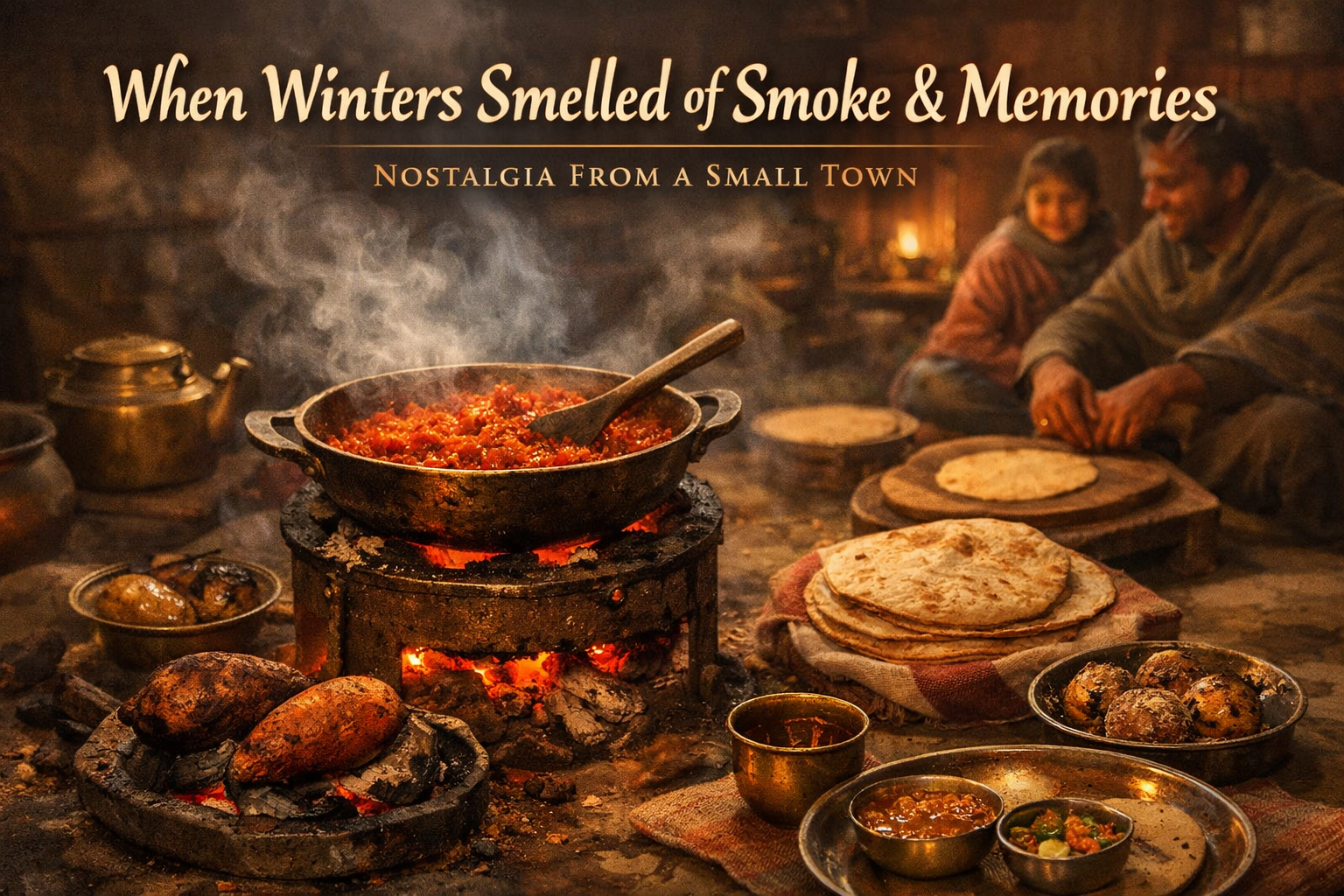
My mother would bring the angeethi into her bedroom. Not casually—ceremoniously. Along with it came a big kadhai filled with grated gajar and milk. Carrot halwa wasn’t rushed in those days. It was coaxed into existence. As long as there was coal glowing in the angeethi, the halwa cooked. When the fire died, cooking stopped. Simple. Sensible. Sacred.
The angeethi served two purposes, as most things did back then. It cooked food, yes—but it also warmed the room, our hands, our conversations. Heat wasn’t isolated in appliances; it was shared.
Another winter ritual—one that still makes me smile—was eating in the kitchen.
My father, my little sister, and I would sit on the floor-mats, thalis in front of us, huddled around the angeethi like moths to a flame. My mother sat by the angeethi, rolling and roasting chapatis, handing them to us one by one—hot, puffed, faintly smoky. That smell of roti kissed by coal fire? No modern gas stove has ever come close. Food didn’t just fill the stomach; it anchored the family.
And oh, the things that were cooked on that humble angeethi. Begun bharta, the brinjal charred black, skins peeling off to reveal that soft, smoky flesh. Shakarkandi roasted directly on coal, split open with a knife, steam rising like a reward. Potatoes, blackened on the outside, buttery within—no seasoning needed, just a pinch of salt and winter sunshine.
All this unfolded in a small university town—Hisar—where homes had gardens, neighbours were friends, and time moved at a pace that allowed memories to form properly. Winters there were not just a season; they were a lifestyle. Quiet roads. Early sunsets. Shared warmth. Pollution-free life!
Today, we have convenience. Speed. Temperature control at the press of a button. But somewhere along the way, we lost the poetry of effort. The patience of waiting for coal to glow. The togetherness of sitting close because warmth demanded it.
I don’t miss the cold, really.
I miss how we met—together.
And that is why, more often than not, my thoughts drift toward small towns again. Not out of escape, but out of longing. I want to wake up where mornings are unhurried and evenings still know how to sit quietly. A place where winters invite you to slow down, not speed up; where kitchens become living rooms, and warmth is shared, not automated. I want a home where food takes time, where seasons decide the rhythm of life, where silence is not awkward but comforting.
I want to live where memories don’t feel like antiques but like everyday companions. Where an angeethi can still glow in a corner, where smoke curls lazily into the air, carrying stories instead of alarms. Where meals are eaten together, close enough to feel each other’s presence, close enough to feel warm.
Maybe I’m chasing a feeling more than a place. Maybe I’m trying to return to a version of life that knew how to pause. But if there is a small town somewhere that still smells of coal fire, roasted sweet potatoes, and fresh chapatis—then that’s where my heart wants to settle.
Because some winters don’t end.
They wait quietly inside us, glowing—like old coals—ready to warm us again, if only we choose to sit close.
Neerja Bhatnagar
Feel free to connect with me on social media to stay updated on more content like this!
Instagram | Facebook | YouTube |Twitter |Podcast |
I have written 3 solo books and 3 anthologies. You can buy my books on Amazon. If you are on Kindle Unlimited, you can read them for free. Pls, do check and share your reviews.